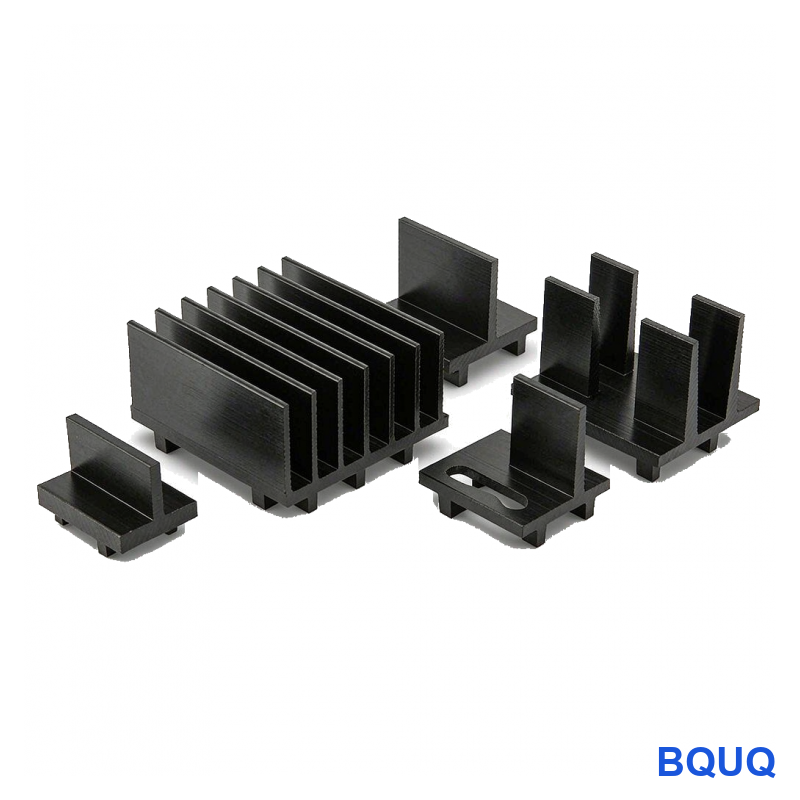
Seeed Studio XIAO için alüminyum ısı emici: 6061-T6 aluminium, 1.0 mm fins at 2.0 mm pitch, 0.05 mm over 100 mm flatness, 0.35 K/W thermal resistance. MOQ 50...
Seeed Studio XIAO için alüminyum ısı emici
Seeed Studio XIAO için alüminyum ısı emici: 6061-T6 aluminium, 1.0 mm fins at 2.0 mm pitch, 0.05 mm over 100 mm flatness, 0.35 K/W thermal resistance. MOQ 50...
Get a Fast Quote for This Part
Send us your drawing / quantity / material — reply within 24h.
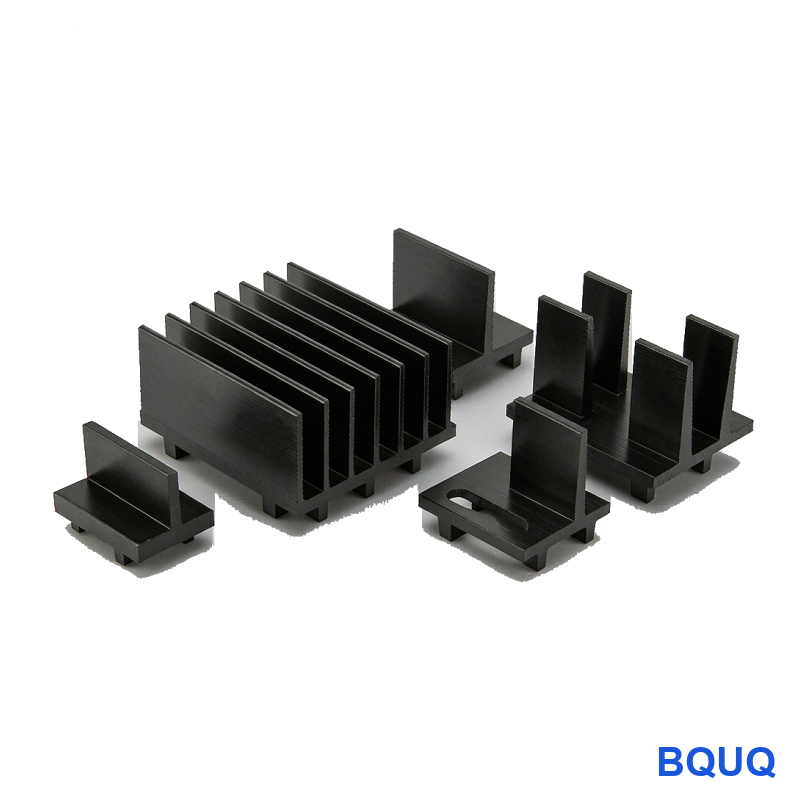
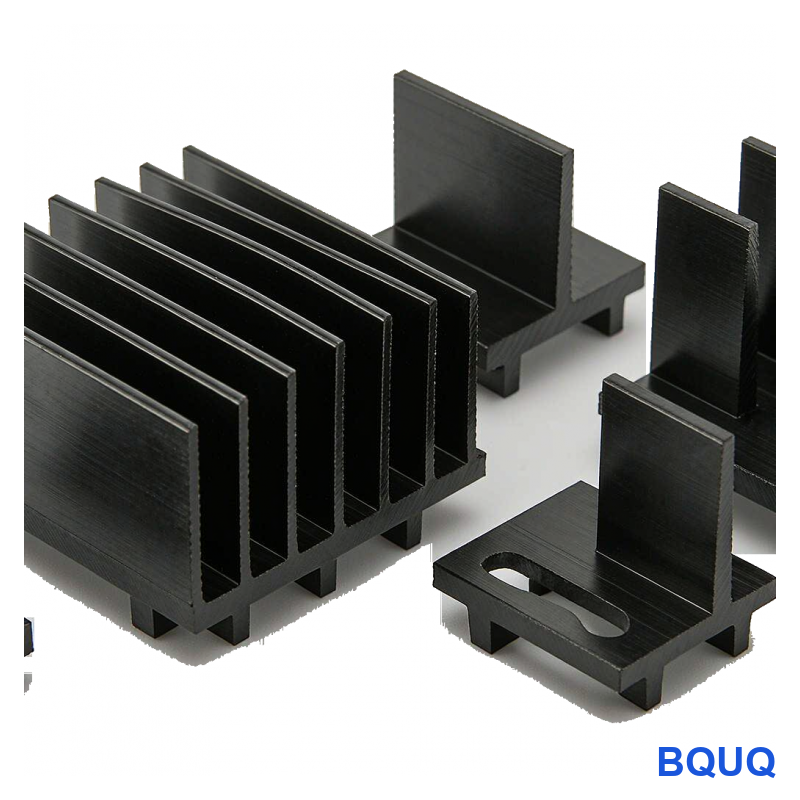
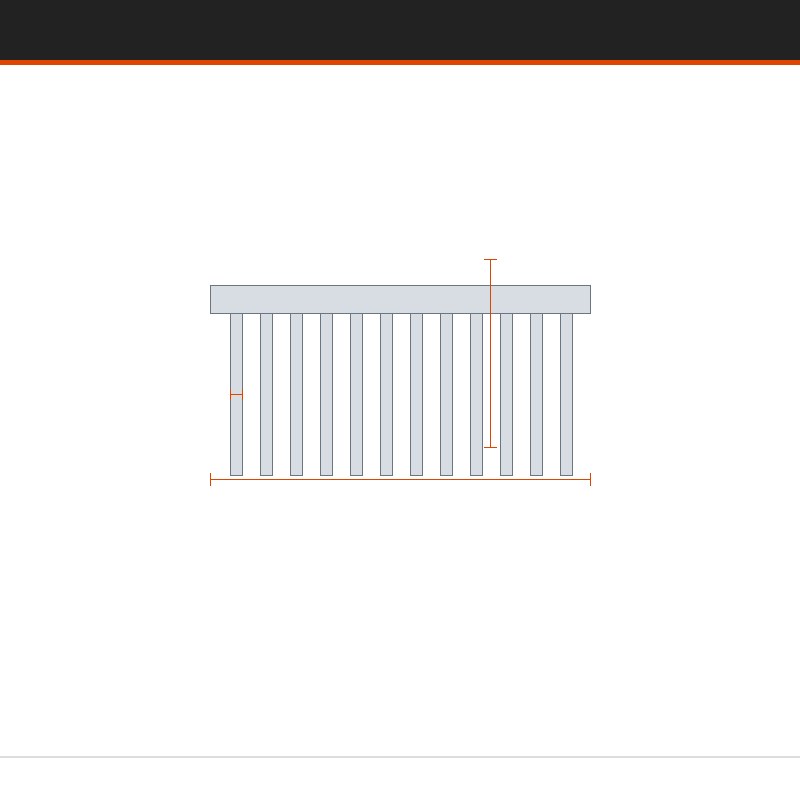
This Seeed Studio XIAO için alüminyum ısı emici is stamped from 6061-T6 aluminium with 1.0 mm fins at 2.0 mm pitch, giving a measured thermal resistance of 0.35 K/W at ΔT = 60 K. The 1.5 mm base holds 0.05 mm over 100 mm, verified on a granite plate, and the assembly runs at 120,000 pcs per month from a single ISO9001 line in Dongguan.
Design Approach and Process
Because the base and fins are pressed as one piece, there is no brazed joint to fail. 0.05 mm over 100 mm flatness on the mounting face is held directly from the tool, which keeps thermal interface contact uniform.
Low fin gauge is where stamping wins: 1.0 mm fins at 2.0 mm pitch give more surface per cubic millimetre than a machined or extruded profile of the same envelope.
Stamped construction tolerates batch variation better than extrusion: die wear shows up first as a measurable shift in fin pitch, which inspection catches at CMM 0.001 mm resolution rather than in the field.
Every stroke is dimensionally identical, so ±0.10 mm hole position carries across the batch. That is what makes EV and OBC charger volume programs repeatable.
The zinc-nickel plating, trivalent passivation finish is applied after forming, so corrosion protection does not get cut through at the fin roots the way it does on machined alternatives.
Material Selection and Surface Finish
The standard material is 6061-T6 aluminium, supplied with zinc-nickel plating, trivalent passivation. For applications where EV and OBC charger exposure is a concern, we recommend the passivated route; where conductivity matters more than weight, copper C110 raises thermal performance and roughly doubles unit mass.
General dimensions run to ±0.10 mm, with critical features such as ±0.03 mm on fin pitch held separately. Formed geometry inherits tooling repeatability of ±0.05 mm, and hole position is held to ±0.10 mm. Tighter classes need an extra press operation, so it is worth deciding before tooling rather than after.
Inspection Before Every Shipment
Each batch carries a CMM report from CMM 0.001 mm resolution. We record flatness, pitch, base thickness and hole position, and flag anything outside ±0.10 mm before it leaves the line.
Lot traceability runs from coil to carton: heat number, press stroke range and inspection record stay attached, so a field issue can be tied back to a specific run.
Flatness is measured on granite rather than on cast iron, because 0.05 mm over 100 mm at 20 x 20 x 10 mm reads differently on a plate that has not been lapped. Records keep both readings.
Final containment is PE bag + export carton, 20 kg per carton. Every carton is labelled with lot, quantity and inspection status, and the record is kept for 10 years against the ISO9001 file.
In EV and OBC charger, the 0.35 K/W rating determines how much airflow the enclosure still needs. At EV and OBC charger junction temperatures, 1.0 mm fins at 2.0 mm pitch keep the delta-T inside the sensor budget.
For EV and OBC charger builds, the 0.05 mm over 100 mm mounting face matters as much as the thermal rating: it decides whether thermal interface material spreads evenly or pools at one end.
In EV and OBC charger, the base usually doubles as the mounting interface. 1.5 mm with 0.05 mm over 100 mm flat gives a stable surface for the EV and OBC charger thermal pad.
Designers working on EV and OBC charger ask for flatness before they ask for thermal data, because EV and OBC charger assembly is automated and a non-flat base stops the line.
Specifications
Parameter
Value / Range
Material
6061-T6 aluminium
Fin thickness
1.0 mm
Fin pitch
2.0 mm
Fin height
22 mm
Base thickness
1.5 mm
Base flatness
0.05 mm over 100 mm
Thermal resistance
0.35 K/W
Thermal test condition
ΔT = 60 K, natural convection
Surface finish
zinc-nickel plating, trivalent passivation
Size range
20 x 20 x 10 mm
FAQ: Your Questions Before Ordering
How do you verify quality on each batch?
Every lot is inspected with CMM 0.001 mm resolution, and the report is included in the shipment. We check 0.05 mm over 100 mm, 2.0 mm, 1.5 mm and hole position against ±0.10 mm. Lot traceability from coil to carton is kept for 10 years.
What is the lead time for the Seeed Studio XIAO için alüminyum ısı emici?
Prototype is 7 working days from drawing approval; production is 12 working days after the first article is signed off. Tooling for a new part takes . We quote FOB Shenzhen, and sea freight to Europe runs about 25 to 30 days after booking.
What tolerance can you hold?
General dimensions run to ±0.10 mm; critical ones such as ±0.03 mm on fin pitch are held separately. Formed features inherit tooling repeatability of ±0.05 mm. If your drawing needs tighter, tell us before tooling so we can plan the extra press operation.
We supply a 2D drawing with the CMM report, and 3D STEP on request. Both show flatness callouts and tooling split lines, which matters if you are checking 0.05 mm over 100 mm in your own assembly.
What is the difference between your Seeed Studio XIAO için alüminyum ısı emici and a skived fin Seeed Studio XIAO için alüminyum ısı emici?
Skived fins are milled, so you get thin, tall fins and higher density in a given height, but the cost scales directly with fin area. Stamping gives the same result in one stroke at a much lower unit cost below 120,000 pcs. For EV and OBC charger in a fixed-height enclosure, stamped is normally the right answer.
Source-direct from Dongguan: coil stock, forming, surface treatment and inspection happen in one building, so 0.05 mm over 100 mm flatness is verified before the part is packed.
Our EV and OBC charger experience runs back to the first tooling programme in 2015. That history is why the standard zinc-nickel plating, trivalent passivation and ±0.10 mm are conservative rather than optimistic.
The factory holds ISO9001 and can ship RoHS and REACH documentation with the PE bag + export carton, 20 kg per carton. Third-party SGS inspection is arranged on request before the container is sealed.
Request a quote: sc@bquq.com | WhatsApp +86 13713157787 | Dongguan, China