Isı emici maliyeti; kalıp, ekstrüzyon, işleme ve yüzey işleminden oluşur. Maliyet artışları ve miktar kırılma noktaları açıklandı. BQUQ (ISO9001, Dongguan) 12 saat içinde fiyat teklifi sunar.
Isı Emici Maliyetini Belirleyen Faktörler: Kalıp, Ekstrüzyon, İşleme ve Yüzey İşlemi
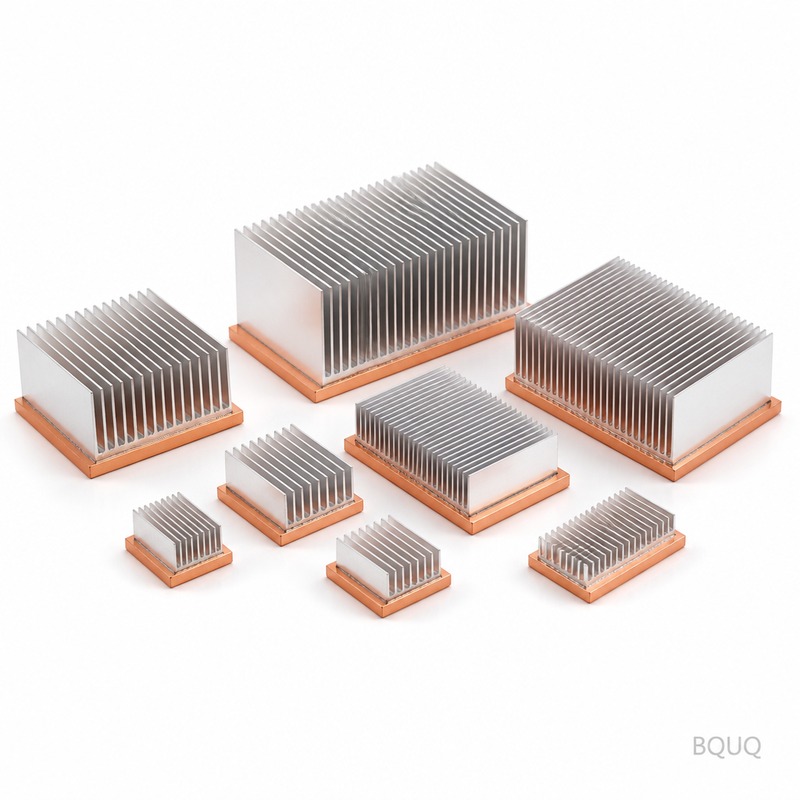
Isı emici maliyeti dört kararın birleşimidir: takım (kalıp veya yokluğu), ekstrüzyon veya stok malzeme, ham profili bitmiş bir parçaya dönüştüren işleme operasyonları ve yüzey işlemi. Sadece boyuna kesilmiş ekstrüde bir soğutucu, hacimde 1-5 $ arasında maliyetlenebilir; özel bir kalıp, taban frezeleme, delme ve siyah eloksal eklediğinizde, kalıp amorti edilene kadar aynı ayak izi 5-20 $ arasına çıkabilir. Ustalık, hangi katmanın bütçenizi tükettiğini bilmektir.
Isı emiciler basit görünür — kanatlı bir alüminyum kütlesi — bu yüzden alıcılar görsel olarak benzer iki parça arasındaki fiyat farkına sık sık şaşırır. Bu fark neredeyse asla sihir değildir; geometrinin içinde gizlenen takım miktarı matematiği ve makine süresidir. Bu rehber, fiyatı katman katman ayırarak paranın tam olarak nereye gittiğini ve hangi kaldıraçların gerçekten hareket ettirdiğini görmenizi sağlar.
Katman 1: Takım — Kalıp veya Yokluğu
Ekstrüde profiller bir ekstrüzyon kalıbına ihtiyaç duyar ve kalıplar gerçek paraya mal olur çünkü bunlar, tam kesitinize göre kesilmiş hassas çelik takımlardır. Tipik bir ısı emici profil kalıbı, karmaşıklığa bağlı olarak 900-2.500 $ aralığında çalışır; ilk siparişte ikinci bir "gerdirme/doğrultma" kalıp seti ve numune çalışmaları biraz daha ekler. Kalıp, ekstrüde ettiğiniz her metreye yayılan sabit bir maliyettir ve bu da parça başına payını saf bir miktar oyunu haline getirir.
| Üretim yöntemi | Takım maliyeti (tipik) | Maliyet hesabının işlediği durum |
|---|---|---|
| Ekstrüzyon, mevcut stok profil | Yok (kalıp mevcut) | Her miktar; parça başına en ucuz |
| Ekstrüzyon, yeni özel kalıp | 900-2.500 $ | ~500+ m/yıl veya birkaç yıllık program |
| Katıdan CNC işleme | Yok (sadece programlama) | Prototipler ve kısa seriler, karmaşık tabanlar |
| Damgalı/katlanmış kanat | Kalıp 2.000-8.000 $+ | 50.000-100.000+ adet/yıl |
| Yapıştırmalı/sıyırmalı kanat | Fikstür + bağlama takımı | Yüksek performans, orta hacim |
Sonuç: kalıp, hacim üzerine bir bahistir. Program toplam 200 parça ise, 1.500 $'lık bir kalıp, herhangi bir metal kesilmeden önce parça başına 7,50 $ ekler — neredeyse her zaman katıdan işlemeden daha kötüdür. Program yılda 50.000 parça çalışıyorsa, aynı kalıp parça başına 0,03 $'a mal olur ve neredeyse bedava hale gelir. Ekstrüde bir teklifi, kalıbı gerçek miktarınıza bölmeden asla işlenmiş bir teklifle karşılaştırmayın.
Katman 2: Malzeme ve Ekstrüzyon
Ekstrüzyonun kendisi, profil zorluğunu yansıtan bir çalışma ücreti artı kilogram başına alüminyum olarak fiyatlandırılır. Basit simetrik bir profil hızlı çalışır; uzun ince kanatlı bir profil yavaş çalışır ve kalıp ömrünü tüketir. Alaşım, fiyat üzerinde insanların beklediğinden daha az etkilidir — 6063-T5, varsayılan termal ekstrüzyon alaşımıdır ve çoğu tesiste 6061 ile yaklaşık aynı maliyettedir — ancak profil zorluğu fiyatı anlamlı şekilde değiştirir. Ekstrüzyondan sonra profil boyuna kesilir ve sonraki her operasyon, parça başına maliyetin gerçekten arttığı yerdir.
| Profil özelliği | Ekstrüzyon maliyetine etkisi | Notlar |
|---|---|---|
| Basit düz veya blok profil | Temel | En hızlı pres hızı |
| Kanatlı profil, hatve ≥ 6 mm | +0-15% | Standart termal profiller |
| Yoğun kanatlar, hatve < 4 mm | +15-40% | Daha yavaş pres, daha fazla kalıp aşınması |
| ~1,5 mm altında ince duvarlar | +20-50% | Doldurması zor, boyut kontrolü zayıflar |
| Asimetri veya ince diller | +10-30% | Metal akışını dengelemek daha zor |
Sonuç: ekstrüzyon maliyeti, metalin kalıptan itilmesinin zorluğunu takip eder ve yoğun veya ince duvarlı profiller iki kez öder — bir kez pres hızında, bir kez kalıp bakımında. Kanatlarınız ~4 mm'den az hatveye ihtiyaç duyuyorsa, ekstrüzyon primini ödemeden önce performans gereksiniminin gerçek olup olmadığını sorun; cevap genellikle kanatları genişletmek ve bir fan eklemektir.
Katman 3: İşleme — Parça Başına Maliyetin Oluştuğu Yer
Çok az ısı emici, ham ekstrüzyon olarak sevk edilir. Çoğu, boyuna kesme, düzlük için taban frezeleme, montaj deliklerinin delinmesi ve kılavuz çekilmesi ve bazen cepler, basamaklar veya montaj bossları gerektirir. Bu operasyonların her biri makine süresidir ve makine süresi, yığındaki en büyük kontrol edilebilir maliyettir. Boyuna testere ile kesme en ucuz operasyondur ve her parçaya uygulanır; düzlük için taban frezeleme, güç cihazının iyi TIM temasına bağlı olduğu her yerde gerekli olan düşük ila orta düzeyde bir prim taşır; montaj deliklerinin delinmesi ve kılavuz çekilmesi, çoğu montajda düşük ila orta düzeyde başka bir kalemdir. Bileşen yuvaları için cepler, basamaklar ve havşalar orta aralığa girer ve bir IGBT veya modül yüzeyinde 100 mm üzerinde ≤ 0,1 mm gibi sıkı bir düzlük toleransı, stabil bir kurulum ve gerçek muayene gerektirdiği için orta düzeyde bir prim ekler. Katıdan tam CNC profil işleme, maliyet aralığının en üstünde yer alır ve fiyatını yalnızca kısa serilerde veya karmaşık geometrilerde hak eder.
Sonuç: eklenen her operasyon teklifte bir kalemdir, bu nedenle en ucuz ısı emici tasarımı, ekstrüzyon sonrası en az özelliğe sahip olandır. Operasyonları mümkün olduğunca birleştirin — hem TIM yüzeyi hem de delik delme için referans görevi gören tek bir frezelenmiş yüzey, ayrı ayrı toleranslandırılmış iki özellikten daha ucuzdur.
Katman 4: Yüzey İşlemi ve Nihai Fiyat Yığını
Eloksal, standart ısı emici yüzey işlemidir ve aynı zamanda kozmetik taleplerin maliyeti şişirdiği yerdir. Ekstrüzyonlarda şeffaf veya siyah eloksal, yüzey alanıyla ölçeklenen tipik olarak mütevazı bir parça başına tutar ekler; seçici eloksal için maskeleme, sıkı renk eşleştirme veya A Sınıfı kozmetik yüzeyler, mühendislik değerleriyle orantısız şekilde işçilik ve fire maliyeti ekler. Termal tarafta, siyah eloksal doğal konveksiyon tasarımlarına gerçekten yardımcı olur, bu nedenle yüzey işlemi seçimi pazarlama departmanına değil, soğutma moduna göre yapılmalıdır.
| Yüzey işlemi veya ekstra | Tipik maliyet notu | Mühendislik değeri |
|---|---|---|
| Yok (değirmen yüzeyi) | Ücretsiz | Zorlanmış hava altında iyi |
| Şeffaf eloksal | Düşük ek ücret | Korozyon koruması, standart |
| Siyah eloksal | Düşük-orta ek ücret | Doğal konveksiyonda gerçek kazanç (radyasyon) |
| Seçici eloksal için maskeleme | Orta ek ücret | Sadece iletken montaj yüzeyleri için |
| Kozmetik A Sınıfı yüzey | Yüksek ek ücret | Isı emicide nadiren gerekli |
| Kromat/dönüşüm | Düşük ek ücret | Elektrik topraklama yolları, korozyon |
Sonuç: dört katmanı tek bir görünümde birleştirin ve fiyat yapısı okunabilir hale gelir. Aşağıda, farklı miktarlarda orta boy bir ekstrüde soğutucu için gösterge niteliğinde bir yığın bulunmaktadır — sayıları teklif olarak değil, aralıklar olarak ele alın; çünkü çiziminiz gerçek değeri belirler.
| Senaryo (orta boy 100 × 100 mm sınıfı) | 50 adet | 500 adet | 5.000 adet |
|---|---|---|---|
| Mevcut stok profil, sadece testere kesimi | 4-8 $ | 2-4 $ | 1-2,5 $ |
| Mevcut profil + taban frezeleme + delikler + siyah eloksal | 8-18 $ | 4-8 $ | 2,5-5 $ |
| Yeni özel kalıp + işleme + eloksal (kalıp amorti edilmiş) | 20-40 $ | 6-12 $ | 3-6 $ |
| Katıdan CNC işleme, karmaşık taban | 15-40 $ | 8-18 $ | 5-12 $ |
Sonuç: miktar, malzeme ve makine süresi dışındaki her katmanı çökertir. Çoğu programda en büyük tek tasarruf pazarlık değil; gerçek yıllık hacme uygun üretim yöntemini seçmektir. Bu, herhangi bir kalıp kesilmeden önce fabrikayla yapılacak konuşmanın tam olarak konusudur. Tek çatı altında ekstrüde ısı emicileri, CNC işlenmiş ısı emicileri ve damgalı ısı emicileri üreten bir fabrika, bu kararı şişirmeden yönlendirebilir; ısı emici ekstrüzyon tasarım rehberimiz, kalıp maliyetini ve ekstrüzyon fiyatını kontrol altında tutan profil sınırlarını kapsar.
Sıkça Sorulan Sorular
S: Özel bir ısı emici ekstrüzyon kalıbı ne kadara mal olur?
C: Tipik bir ısı emici profil kalıbı, boyut ve karmaşıklığa bağlı olarak yaklaşık 900-2.500 $ arasında çalışır; numune ve doğrultma işleri ilk siparişe eklenir. Kalıp, hacim birkaç bin metre profili geçtiğinde ihmal edilebilir hale gelen tek seferlik bir maliyettir.
S: Küçük miktarlı ısı emici teklifim neden bu kadar pahalı?
C: Çünkü sabit maliyetler — kalıp amortismanı (varsa), programlama, kurulum ve ilk parça muayenesi — az sayıda parçaya dağıtılır ve kısa ekstrüzyon serileri minimum ücret öder. 50 parçada, katıdan işleme genellikle ekstrüzyonu yener; 5.000 parçada aynı tasarım birim fiyatın üçte birine düşebilir.
S: Siyah eloksal ısı emici maliyetini çok artırır mı?
C: Siyah eloksal, standart ekstrüzyonlarda yalnızca mütevazı bir parça başına ek ücret ekler, ancak yüzey alanıyla ölçeklenir. Ayrıca radyasyon yoluyla doğal konveksiyon performansını gerçekten iyileştirir, bu nedenle pasif tasarımlar için genellikle doğru yüzey işlemidir — ve maliyetten kısılacak yanlış yerdir.
S: Isı emici yapmanın en ucuz yolu nedir?
C: Mevcut bir stok ekstrüzyon profilini kullanın, boyuna kesin ve montajın gerçekten ihtiyaç duyduğunun ötesinde son işleme yapmayın. Eklenen her operasyon — taban frezeleme, delme, kılavuz çekme, eloksal, kozmetik yüzeyler için paketleme — arkasında gerçek bir mühendislik nedeni olan bir maliyet katmanı ekler.
S: Isı emicilerde damgalama ne zaman ekstrüzyondan daha ucuz hale gelir?
C: Tipik olarak yılda yaklaşık 50.000-100.000 adedin üzerinde, sac metal kalıp maliyeti neredeyse sıfıra amorti olduğunda ve ince kanatlar bobin stoktan şekillendirilebildiğinde. Bu hacmin altında, ekstrüde veya CNC işlenmiş üretim neredeyse her zaman toplam maliyette kazanır.
İlgili Makaleler
- cnc-machined-heat-sinks-guide — BQUQ Termal Yönetim mühendislik serisinden daha fazlası.
- heat-sink-extrusion-design-guide — BQUQ Termal Yönetim mühendislik serisinden daha fazlası.
- heat-sink-fin-design-guidelines — BQUQ Termal Yönetim mühendislik serisinden daha fazlası.
İlgili Kaynaklar
- BQUQ Hakkında: Dongguan'da tek çatı altında dört üretim hattı çalıştıran ISO9001 sertifikalı kaynak fabrika.
- Isı emiciler ve termal parçalar: termal hattan ekstrüde, CNC işlenmiş ve damgalı seçenekler — ekstrüde ısı emiciler, CNC işlenmiş ısı emiciler, damgalı ısı emiciler.
- Sektör trendleri: üretim, malzeme piyasası ve alıcılar için tedarik analizi.
- Teknik makaleler: mühendislik rehberleri ve süreç karşılaştırmaları — bu makalenin geldiği yerden daha fazlası.
- SSS merkezi: CNC, damgalama, yaylar ve ısı emiciler hakkında hızlı yanıtlar.
- Vaka çalışmaları: mühendisliğini yaptığımız ve teslim ettiğimiz projelerden gerçek parçalar ve gerçek rakamlar.
- Bize ulaşın: çiziminizi gönderin ve 12 iş saati içinde fiyat teklifi alın.
BQUQ Mühendislik Ekibi tarafından yazılmıştır. BQUQ, Dongguan, Çin'de tek çatı altında CNC işleme, metal damgalama, özel yaylar, ısı emici ve pens hatları çalıştıran ISO9001 sertifikalı bir kaynak fabrikadır. 12 iş saati içinde fiyat teklifi için çizimleri sc@bquq.com adresine veya WhatsApp +86 13713157787 numarasına gönderin. www.bquq.com