2J ve 16C pens sistemleri ile İsviçre tipi torna tezgahları için sabit ve kayar kılavuz burçların karşılaştırması ve boyutlandırma mantığı. BQUQ, CNC ile üretilen İsviçre pens aynaları tedarik eder.
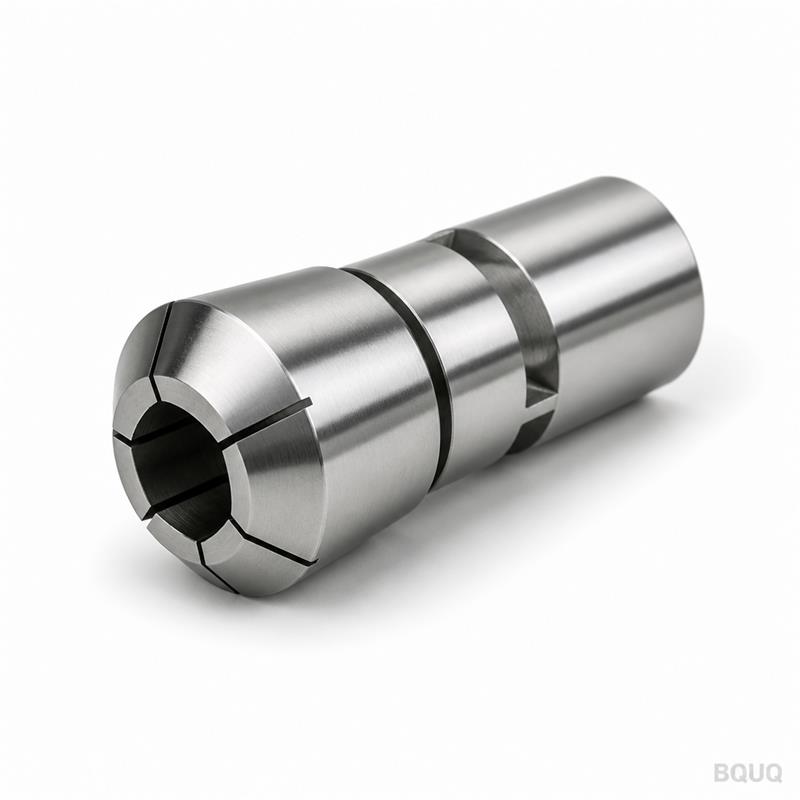
İsviçre Pens Sistemleri: 2J, 16C ve Kılavuz Burç Sorunu
Bir İsviçre pens sisteminin iki ayrı görevi vardır: iş mili pensi, çubuğun beslenebilmesi ve döndürülebilmesi için onu kavramalıdır; kılavuz burç ise aynı çubuğu takımların kestiği noktada tam olarak desteklemelidir. 2J ve 16C aileleri, İsviçre tipi ve otomatik torna tezgahlarında en sık karşılaşacağınız iki pens sistemidir ve bunlar arasında seçim yapmak çoğunlukla çubuk çapı, makine iş mili tasarımı ve ne kadar eksenel uzunluk kontrolüne ihtiyacınız olduğu meselesidir.
Herhangi bir kesme işlemi başlamadan önce, bir İsviçre tipi torna tezgahı ham çubuğun nasıl tutulacağına karar verir. Çubuk, dönen bir iş mili pensi içinde hareket eder; bu pens çubuğu kavrar, serbest bırakır ve besler. Takımların arkasında, bir kılavuz burç, ince bir çubuğun kesme altında bükülmemesi veya sarsılmaması için destek boşluğunu kapatır. İkisini de doğru yaparsanız makine doğal hassasiyetini korur; birini yanlış yaparsanız, aşağı akıştaki hiçbir şey - takım, hız, soğutma sıvısı - parçayı kurtaramaz. Bu kılavuz, iki pens sistemini açıklar ve ardından her kurulum mühendisinin eninde sonunda sorduğu kılavuz burç sorusunu yanıtlar.
"Pens Sistemi" Aslında Ne Anlama Gelir
Bir pens sistemi, pensin kendisinden daha fazlasıdır. Bu, komple zincirdir: pens gövdesi, onu iş miline oturtan ayna veya adaptör, sıkma somunu veya çekme tüpü ve stok malzemenize uyan delik geometrisi. Aynayı kontrol etmeden pensi satın alırsanız, elinizde bir kağıt ağırlığı kalır. Sistem numarası - 2J, 16C, 5C, 3J - pens gövde şeklini, dişini veya konikliğini ve dolayısıyla hangi aynalara ve adaptörlere uyduğunu tanımlar.
Sistemleri karşılaştırırken iki gerçek önemlidir. İlk olarak, sayı arayüz ailesini tanımlar, çubuk boyutunuzu değil: bir 2J pens, kabaca 3 mm'den yaklaşık 38 mm'ye kadar değişen deliklerde mevcuttur. İkinci olarak, aynı sistemin pensleri, o sistem için üretilmiş aynalar arasında değiştirilebilir; bu nedenle tüm atölyeler tek bir ailede standartlaşır ve yedek aynalar yerine yedek pensler satın alır. Pens malzemeleri de önemlidir - iyi pensler sertleştirilmiş alaşımlı veya yay çeliğinden işlenir, kavrama deliği taşlanır ve segmentlerin eşit şekilde büzülmesi için yarıklar açılır. BQUQ'nun otomatik torna penslerini işleme şekli tam olarak budur: sertleştirilmiş alaşımlı çelikten CNC tornalanmış ve frezelenmiş, ardından ısıl işlem görmüş ve delik 0.005 mm sınıfında tutulmuştur.
2J ve 16C: İki İsviçre İşgücü
2J pens, klasik İsviçre ve otomatik torna tezgahı bağlama pensidir - kısa gövde, kompakt konik, iş milinin aynı zamanda besleme mekanizması olduğu makineler için tasarlanmıştır. 16C ailesi, İsviçre tipi makinelerde de kullanılan ancak geleneksel CNC torna tezgahlarında ve pens aynalı vidalama makinelerinde çok daha yaygın olan daha eski, daha büyük Amerikan sistemidir. Yuvarlak çubuk için tipik katalog maksimumları ilk filtredir:
| Pens sistemi | Tipik maks. yuvarlak çubuk | Tipik inç adımı | En çok nerede görülür |
|---|---|---|---|
| 5C | ~27 mm (1-1/16 in) | 1/64 in | Manuel ve CNC torna tezgahları, takım atölyesi |
| 16C | ~41 mm (1-5/8 in) | 1/64 in | CNC torna tezgahları, vidalama makineleri, daha büyük İsviçre işleri |
| 2J | ~38 mm (1-1/2 in) | 1/64 in | İsviçre tipi torna tezgahları, otomatikler, kompakt iş milleri |
| 3J | ~51 mm (2 in) | 1/64 in | Ağır otomatik ve çok iş milli işler |
Bunlar katalog maksimumlarıdır, öneriler değil - herhangi bir pensin aralığının üst sınırına yaklaştıkça kavrama kalitesi düşer ve altıgen veya kare delikler, köşe geometrisi nedeniyle her zaman kapasiteden fedakarlık eder (tipik olarak %10-25). Çıkarım: En büyük stok çapınızı kapsayan en küçük sistemi seçin, ardından deliği gerçek çubuğa göre boyutlandırın.
Maksimumun altında, seçim makine tarafından belirlenir. Bir 2J sisteminin daha kısa gövdesi, bir İsviçre makinesinin dar iş mili zarfına uyar ve besleme mekanizması için daha fazla yer bırakır; bir 16C sistemi daha büyük kapasite ve çok derin bir ayna ve adaptör tabanı sunar. Yeni bir İsviçre tipi pens aynası hattı donatıyorsanız, iki soru sorun: makine hangi iş mili burnunu taşıyor ve çalıştıracağınız en büyük çubuk çapı nedir? Cevap genellikle aileyi sizin için seçer.
Kılavuz Burç Sorunu: Sabit mi Kayar mı
Şimdi geleneksel torna tezgahlarından gelen insanları şaşırtan İsviçre işleme kısmı. Kayan iş mili başlıklı bir İsviçre makinesinde, punta hareket eder ve çubuğu takım bölgesinin yakınına monte edilmiş bir kılavuz burçtan iter. Bu burç, kesme sırasında gerçek iş tutma yükünü taşır: çubuğu takımların yüzde bir milimetrenin kesirleri kadar yakınına konumlandırır. Sabit ve kayar, burcun nasıl monte edildiğini ifade eder.
Sabit (durağan) bir burçla, burç makine çerçevesine sabitlenir ve çubuk içinden kayar; bu, İsviçre makinelerine uzun, ince parçalar için ünlü desteklerini veren klasik düzenlemedir. Kayar (hareketli) bir burçla, burç punta ile birlikte taşınır, böylece destek noktası çubukla birlikte hareket eder - bu, daha uzun ana iş mili hareketine ihtiyaç duyan veya desteği kaybetmeden burç yüzeyinden daha uzaktaki özellikleri işlemek isteyen makinelerde kullanılan bir düzendir. Farklılıklar, sabit ve kayar kılavuz burçlar kılavuzumuzda derinlemesine ele alınmıştır; kısa versiyon tablodadır:
| Faktör | Sabit burç | Kayar burç |
|---|---|---|
| Destek noktası | Sabit, takım bölgesinde | Punta ile birlikte hareket eder |
| Çubuğa tipik boşluk | Küçük, ~0.003–0.008 mm tipik | Genellikle açılır, ~0.01–0.02 mm tipik |
| En iyi olduğu durumlar | Uzun ince parçalar, yüksek L/D, ince yüzey | Daha uzun ana iş mili stroku, daha ağır kaba talaş |
| Aşınma deseni | Burç deliği kesme bölgesinde aşınır | Aşınma burç hareketine yayılır |
| Kurulum maliyeti | Düşük, ancak burç yakından boyutlandırılmalıdır | Daha yüksek, hizalanacak daha fazla hareketli parça |
Boşluk değerleri tipik çalışma aralıklarıdır, spesifikasyonlar değil - doğru değer çubuk çapına, malzemeye ve iş mili hızına bağlıdır. Tür ne olursa olsun, burç deliği gerçek stoğa yakın boyutlandırılmalıdır: çok gevşekse çubuk esner ve yüzeyi işaretler; çok sıkıysa sıkışır veya yanar.
Burç Seçimi ve Bakımı
Kılavuz burçlar uzun ama sınırlı ömre sahip sarf malzemeleridir ve malzeme seçimleri, işinizin ekonomisini takip eder:
| Burç tipi | Tipik ömür belirleyici | Maliyet seviyesi | Tipik kullanım |
|---|---|---|---|
| Sertleştirilmiş takım çeliği, düz | Aşındırıcı aşınma | En düşük | Kısa seriler, yumuşak malzemeler |
| Tungsten karbür, katı | Aşınma ve kırılma | Yüksek | Uzun seriler, aşındırıcı alaşımlar |
| Değiştirilebilir astarlı karbür | Astar değişimi | Döngü başına orta | Yüksek hacimli işler, hızlı geri dönüş |
| Bölünmüş veya ayarlanabilir burç | Boşluğun ince ayarı | Orta | Sıkı boşluklu hassas işler |
Aşınmış bir burç, önce çubukta yükseltilmiş bir bant, donuklaşan bir yüzey veya parçanın önünde sürüklenen boyut olarak kendini gösterir. İş değiştirdiğinizde çubuk çıkarılmış haldeyken burç deliğini kontrol edin ve stoğu çizmeden önce burcu değiştirin - çizilmiş parçalardan oluşan bir seriyi kurtarmak herhangi bir burçtan daha pahalıya mal olur. Kılavuz burç makalemiz, muayene aralıklarını ve aşınma teşhisini daha ayrıntılı olarak ele alır.
Sistemin Fabrikayla Buluştuğu Yer
Bir pens sistemi, yalnızca kendisini oluşturan parçalar kadar iyi performans gösterir. Pens gövdesi, oturduğu koniğe eş merkezli olmalı, delik stoğa birkaç yüzde bir milimetre içinde uymalı ve sertleştirilmiş segmentler binlerce döngü boyunca eşit şekilde esnemelidir. Bu nedenle BQUQ, pensleri ve aynaları ±0.005 mm kapasiteli CNC tornalama ve frezeleme merkezlerinde işler ve ardından bir örnek yerine her partide delikleri doğrular. Bir İsviçre hattı donatıyorsanız - pensler, aynalar veya komple bir 2J ayna kurulumu - stok boyutlarını ve iş mili ayrıntılarını BQUQ mühendislik ekibine gönderin ve 12 çalışma saati içinde bir teklif alın.
Sıkça Sorulan Sorular
S: 2J ve 16C pens arasındaki fark nedir?
C: Bunlar farklı gövde ve konik aileleridir. 2J, İsviçre tipi ve otomatik torna tezgahlarında yaygın olan, tipik olarak yaklaşık 38 mm'ye kadar yuvarlak çubuğu kapsayan daha kısa bir sistemdir; 16C, CNC torna tezgahlarında yaygın olan, tipik olarak yaklaşık 41 mm'ye kadar olan daha büyük Amerikan sistemidir. Hangisine ihtiyacınız olduğuna ayna karar verir.
S: Bir pens sistemi numarası bana çubuk kapasitesini söyler mi?
C: Hayır. Sistem numarası arayüz ailesini ve kabaca maksimumunu tanımlar, ancak gerçek kapasite sipariş ettiğiniz deliğe bağlıdır. Bir 2J pens, küçük deliklerden yaklaşık 38 mm'ye kadar mevcuttur, bu nedenle delik boyutunu her zaman ayrıca belirtmelisiniz.
S: Geleneksel bir torna tezgahı gerektirmezken neden bir İsviçre tezgahı kılavuz burç gerektirir?
C: Çünkü punta kayar ve çubuk iş mili ile takımlar arasında desteksizdir. Burç, çubuğu kesme bölgesinde destekleyerek ince parçaları mahvedecek sapmayı ve titreşimi önler. Geleneksel torna tezgahları bunun yerine kısa sert stoğu bir aynada tutar.
S: Sabit mi kayar burç mu - hangisi daha iyi yuvarlaklık verir?
C: Sabit burçlar genellikle en sıkı desteği verir çünkü çubuk takımların hemen yanında yönlendirilir; bu nedenle hassas İsviçre işlerinde baskındırlar. Kayar burçlu makineler, daha uzun hareket ve esneklik için bundan biraz ödün verir. Yuvarlaklık sonuçları her iki durumda da kuruluma bağlıdır.
S: Burç deliği çubuk çapına ne kadar yakın olmalıdır?
C: Tipik olarak çubuk boyutuna ve burç tipine bağlı olarak birkaç mikrondan yaklaşık 0.02 mm'ye kadar. Çok gevşek esnemeye ve işaretlere neden olur; çok sıkı sıkışmaya ve ısınmaya neden olur. Burçları nominal boyuta değil, ölçülen stoğa göre sipariş edin.
BQUQ Mühendislik Ekibi tarafından yazılmıştır. BQUQ, Çin'in Dongguan kentinde, tek çatı altında CNC işleme, metal damgalama, özel yaylar, soğutucu ve pens hatlarını yürüten ISO9001 sertifikalı bir kaynak fabrikasıdır. Çizimleri sc@bquq.com adresine veya WhatsApp +86 13713157787 numarasına gönderin, 12 çalışma saati içinde teklif alın. www.bquq.com